
ADVANCED TARGETING

(Intro)
A single recruitment experience that merges two products, two pricing models, and two mental models into one coherent workflow inside UserTesting.
UserTesting acquired User Interviews, creating an opportunity to bring advanced participant recruitment directly into the core product. The challenge wasn't adding a feature, it was reconciling two different audience building philosophies without customers ever feeling the seam.
The work spanned strategy, UX, UI, accessibility and validation, shipped as an MVP with a documented path to a fully unified future experience.
(Product area)
CUSTOMER AUDIENCE CREATION
(Role)
END-TO-END PRODUCT DESIGN

Context
(The problem)
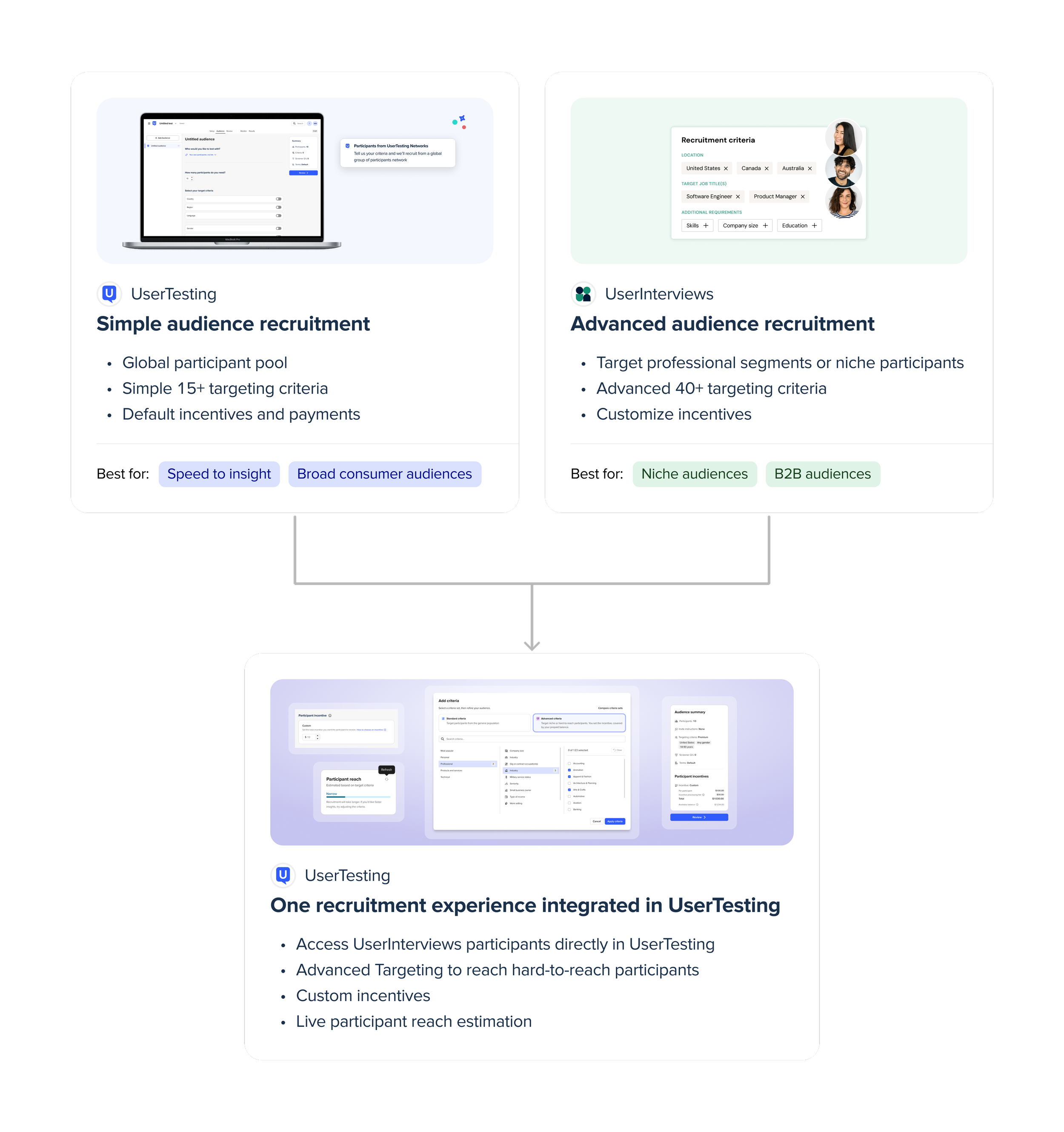
UserTesting was optimized for fast access to broad participant panels, while UserInterviews was built for highly targeted recruitment with a much richer set of screening capabilities.
UserTesting and UserInterviews are two products with different tech stacks, pricing models, and design philosophies, built to solve different jobs.
As a result, customers recruiting niche audiences had to leave their primary workflow, manage recruitment in a separate product, and return to UserTesting to run their studies.
The design goal was to create a unified experience that felt native to UserTesting, reduced workflow fragmentation, and balanced immediate technical limitations with a clear path toward a more integrated future.
aPpROaCh
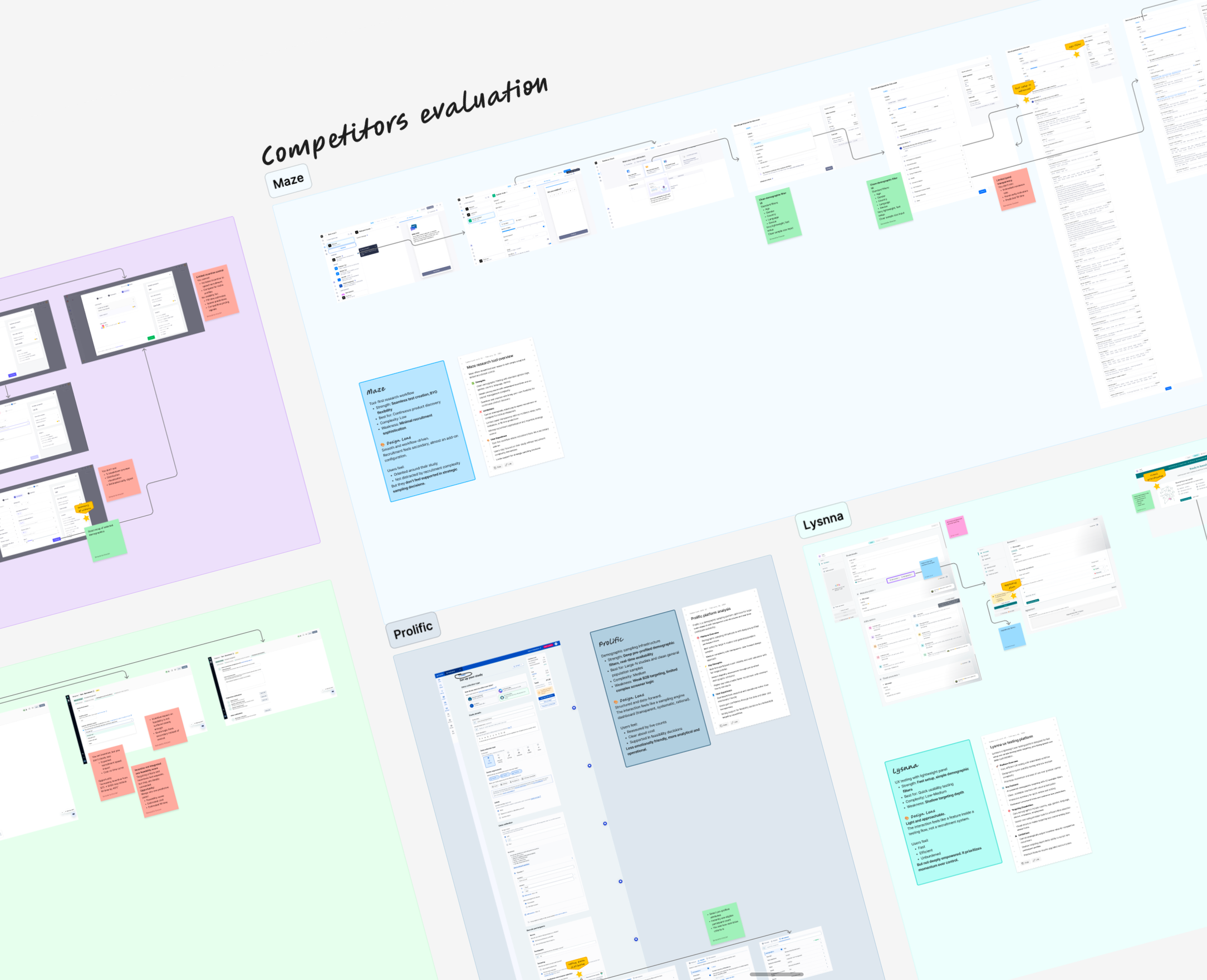
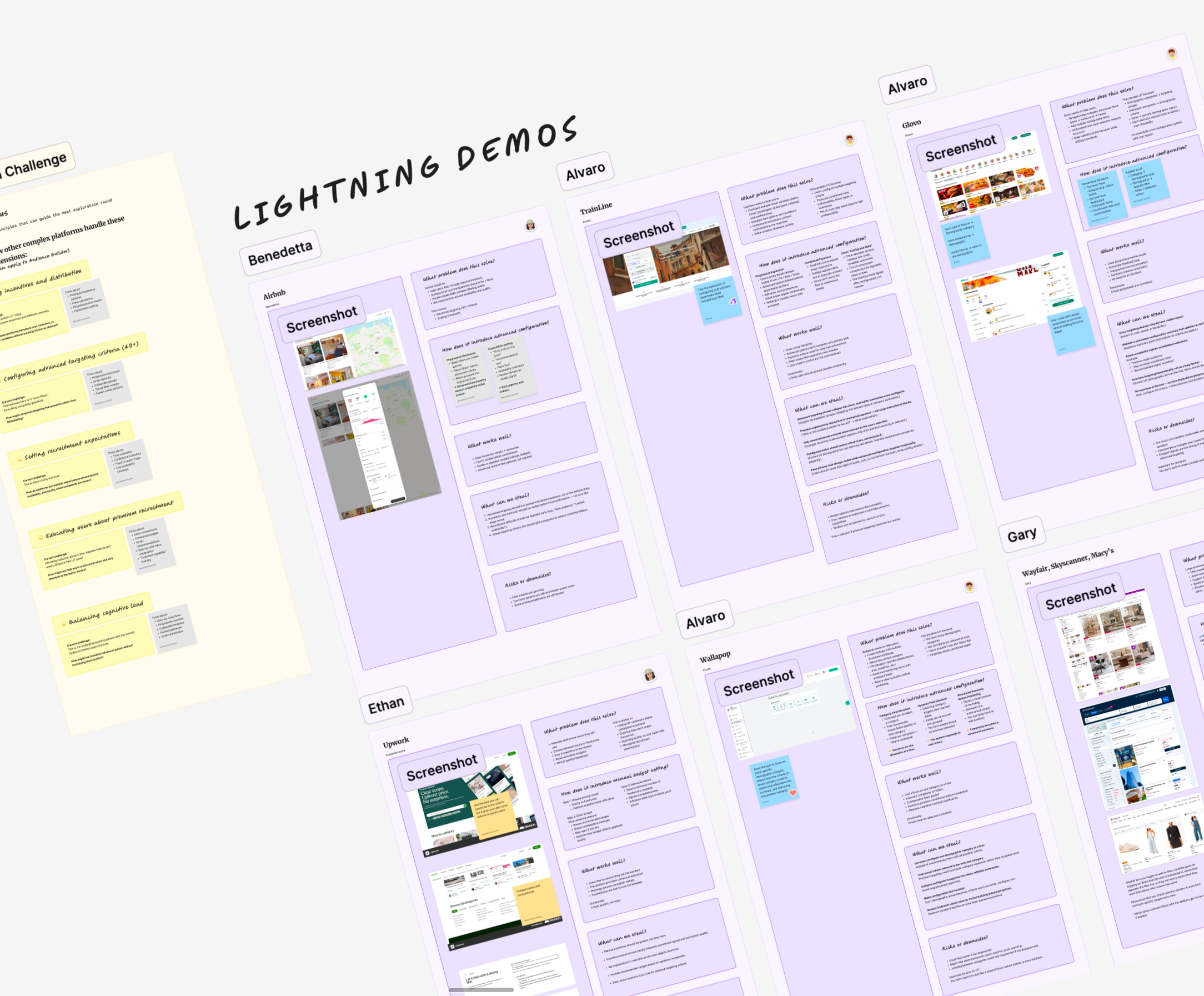
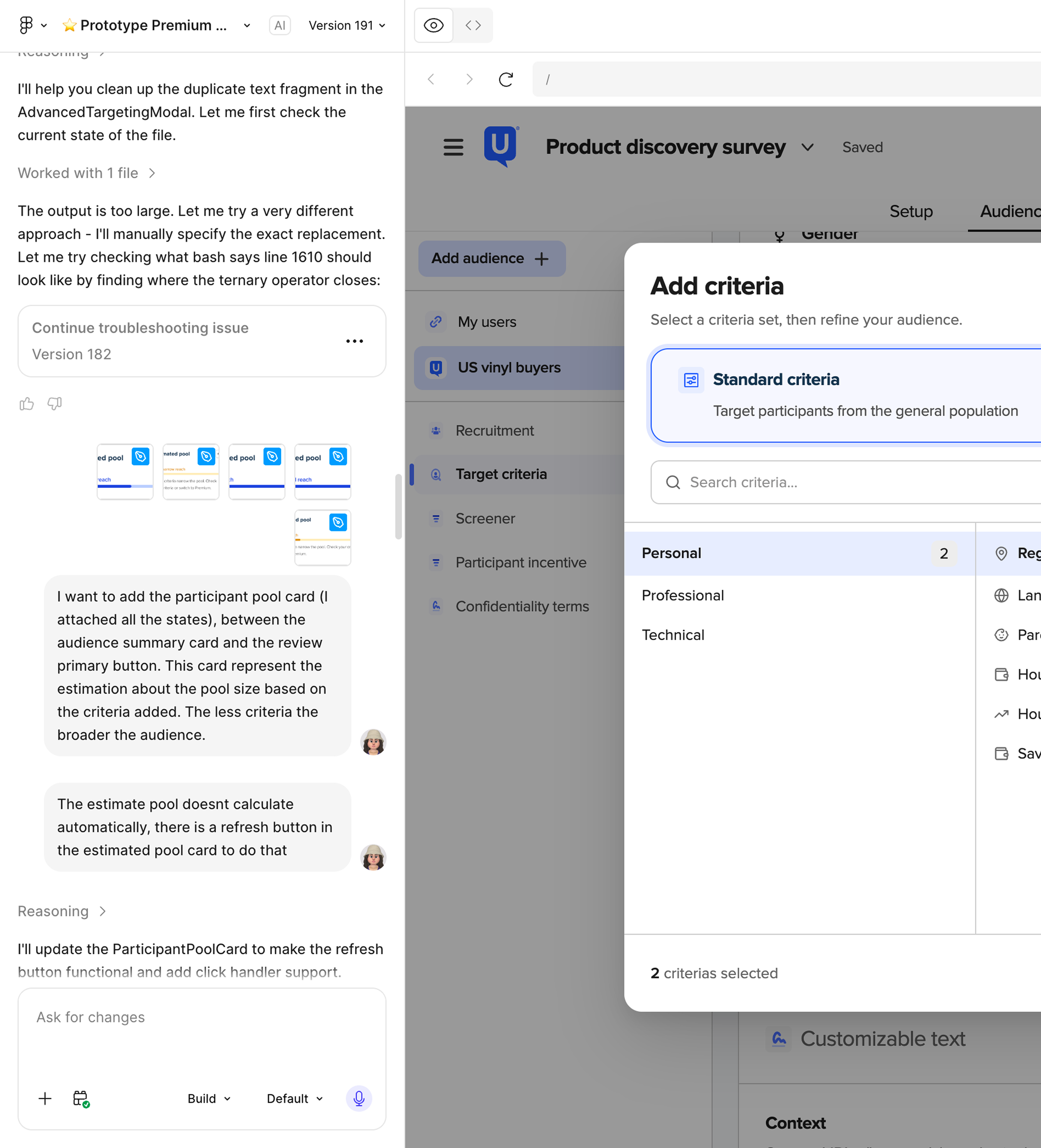
This project heavily leveraged AI throughout the design and development process, from research synthesis and concept exploration to accessibility reviews, documentation, and interactive prototyping.
The way we worked was fluid and non-linear: prototyping before a PRD existed, testing AI-generated flows before committing to a direction, adjusting as we learned. We were also rolling out a new way of working across the team at the same time, so this project doubled as a live test case for both the tool and the process shift.
Working alongside Product and Engineering, we continuously balanced customer needs, technical constraints, and long-term product strategy. AI accelerated exploration, communication, and iteration, which helped us get the first piece of value in front of customers sooner and shape the MVP, fast-follows, and future vision in parallel.
designing with AI

ChatGPT
Accessibility annotations
Workshops prep & design crit
Documentation
Accessibility annotation used to mean writing everything manually before handing off. Using ChatGPT to draft and structure those annotations cut that work down significantly and freed up time for the interaction design itself.
Claude
Interactive prototypes
Vision concepts
Flows exploration
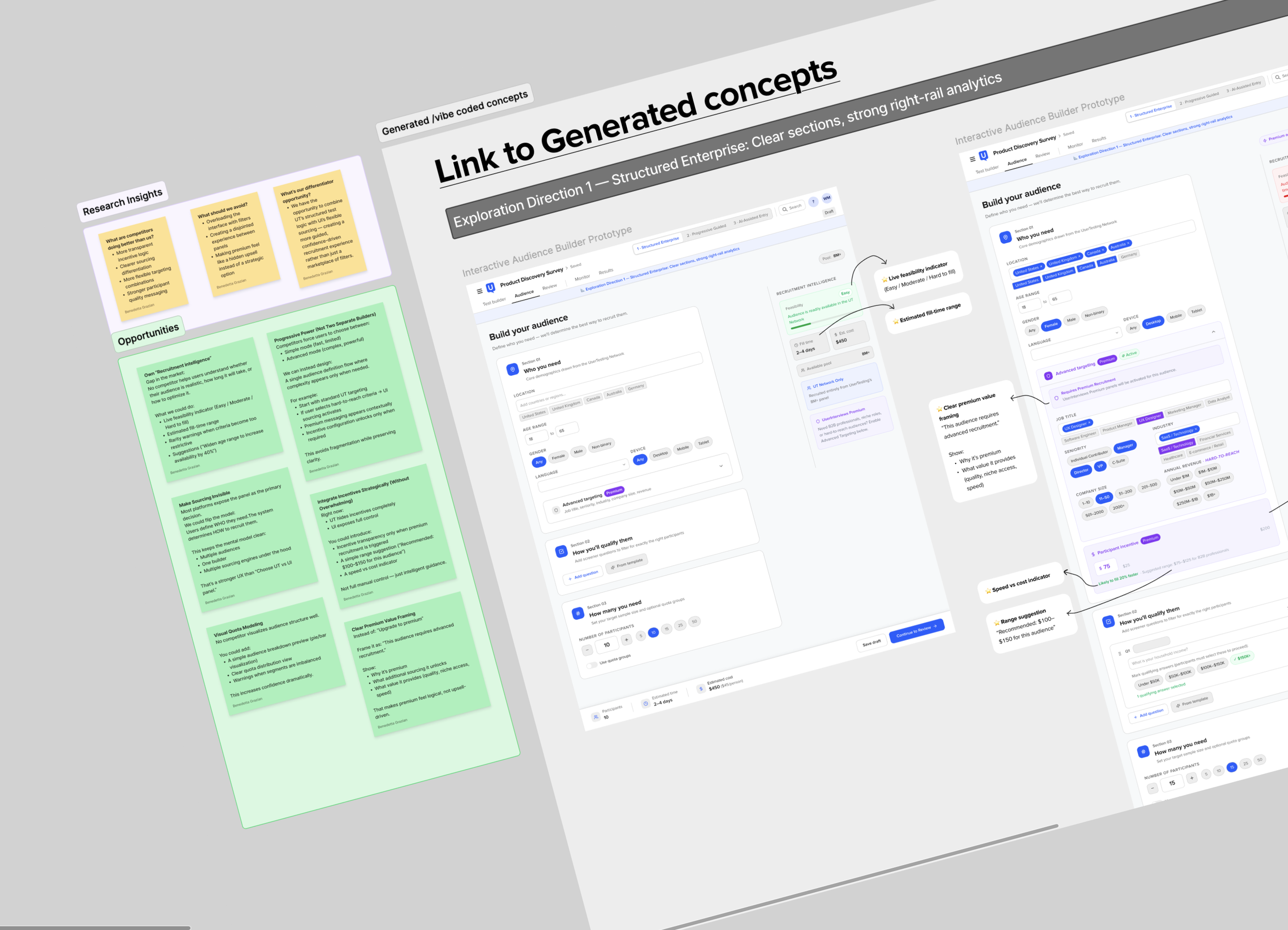
Engineering started building directly from Claude-built interactive prototypes instead of static specs. This allowed us to validate direction with customers before committing engineering time.
Figma make
Layout explorations
Rapid ideations
Interaction ideas
Used to explore more directions in the time it used to take to polish one. A way to widen the option set before narrowing down.
solution
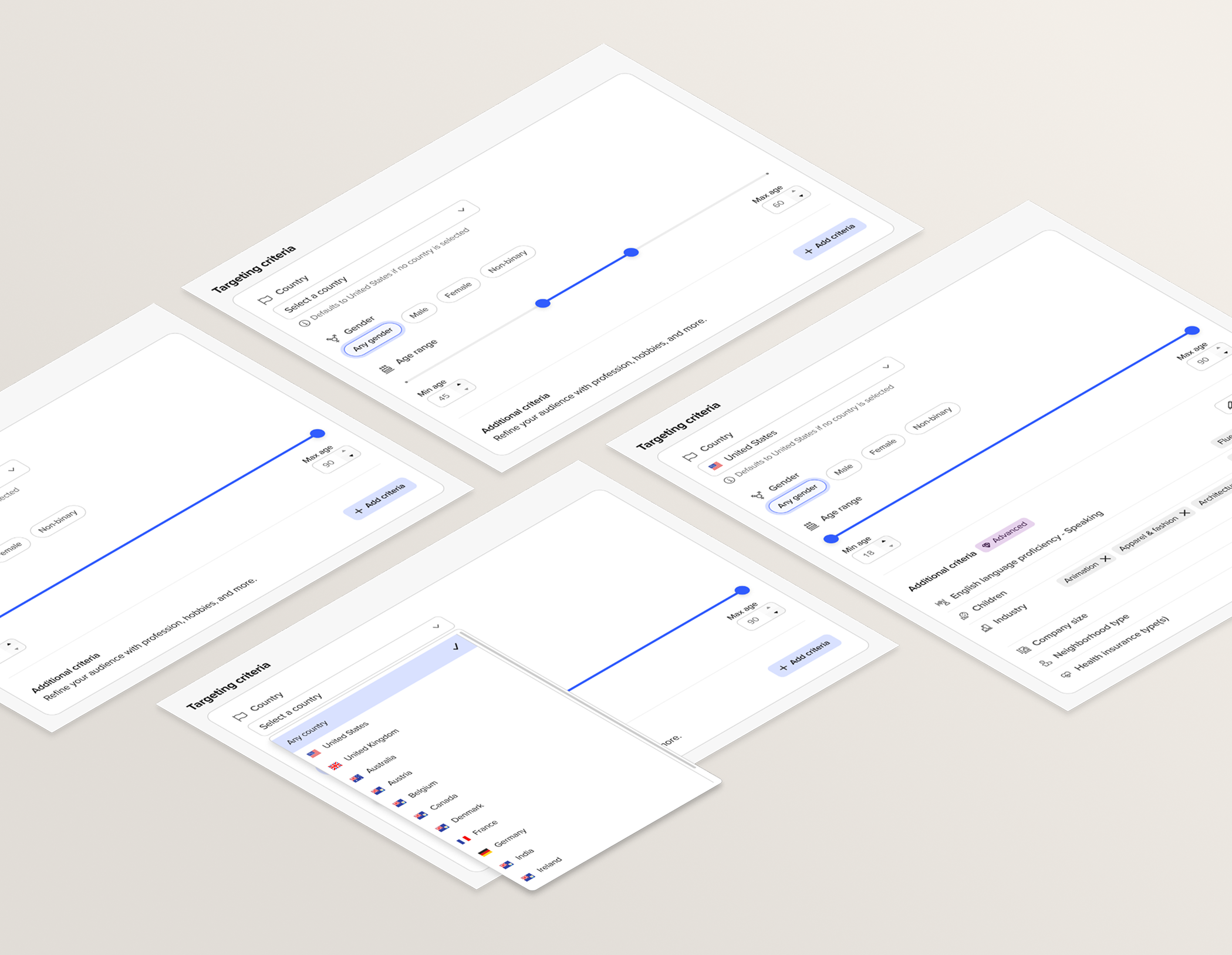
Standard vs. Advanced targeting
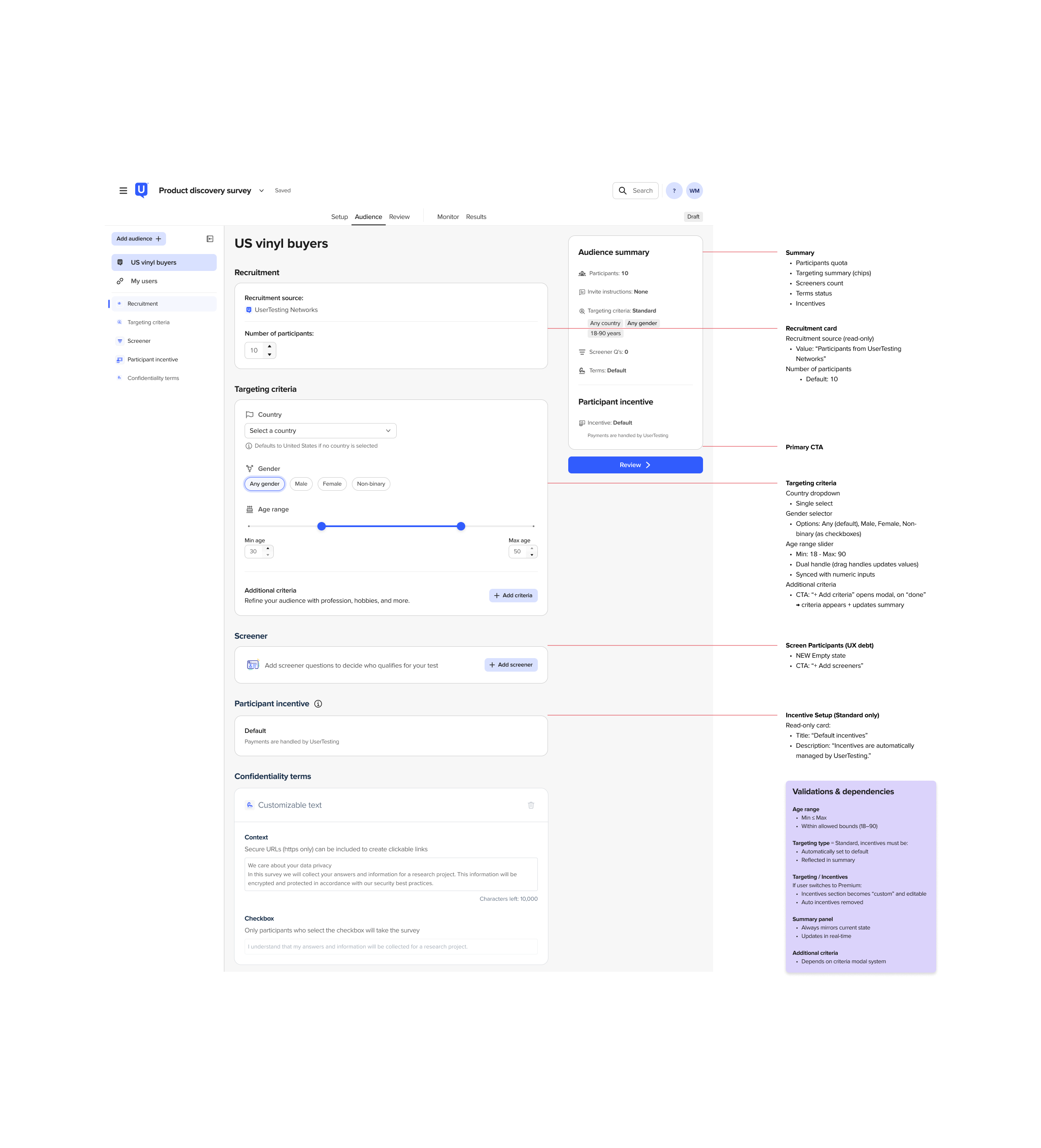
Advanced and Standard targeting relied on different capabilities and couldn't yet be unified because criteria mapping wasn't technically possible.
I designed two complementary targeting modes that clearly communicated their differences while encouraging exploration. Customers could switch between modes without losing their work, reducing friction while respecting the current platform constraints.
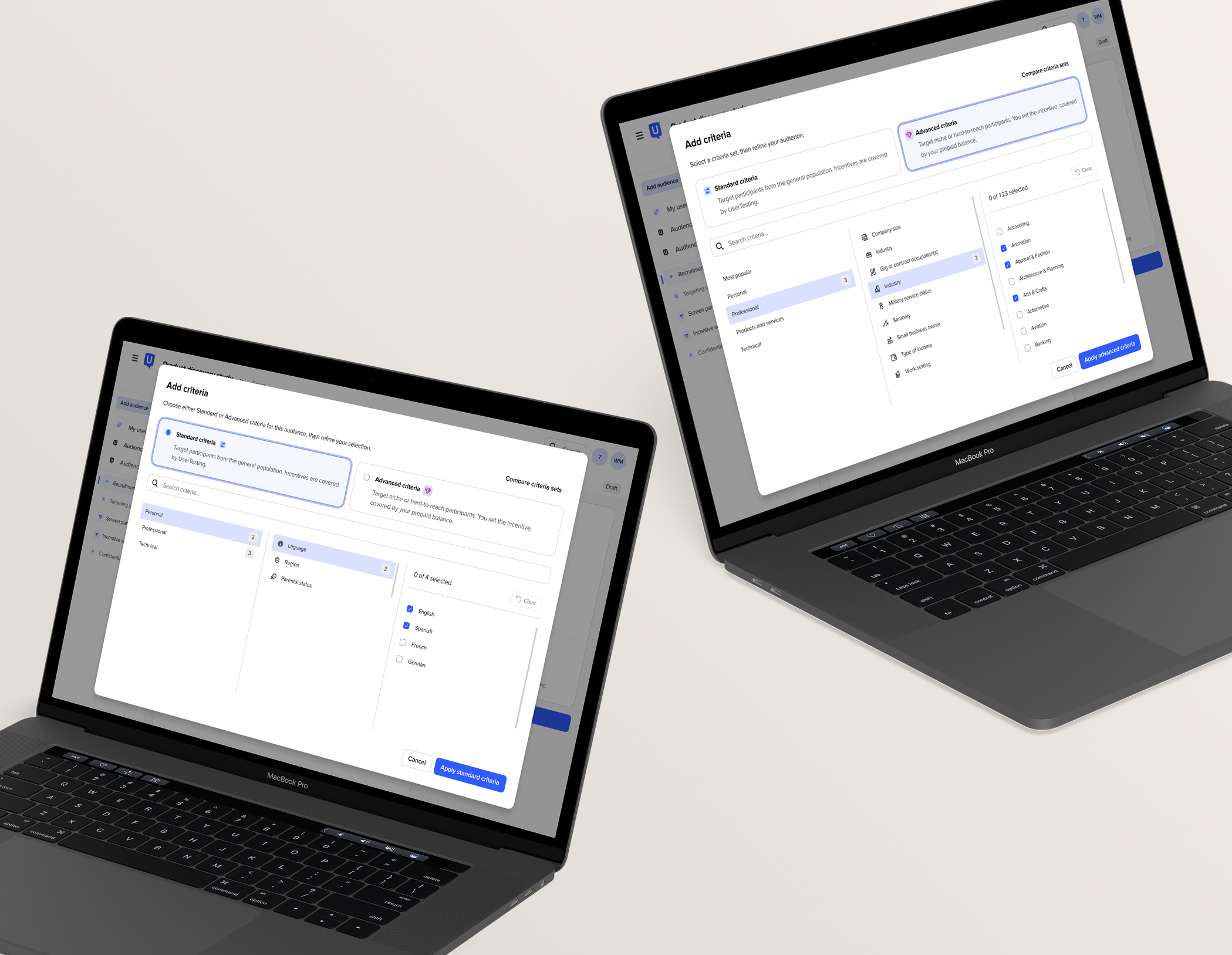
NEW targeting criteria
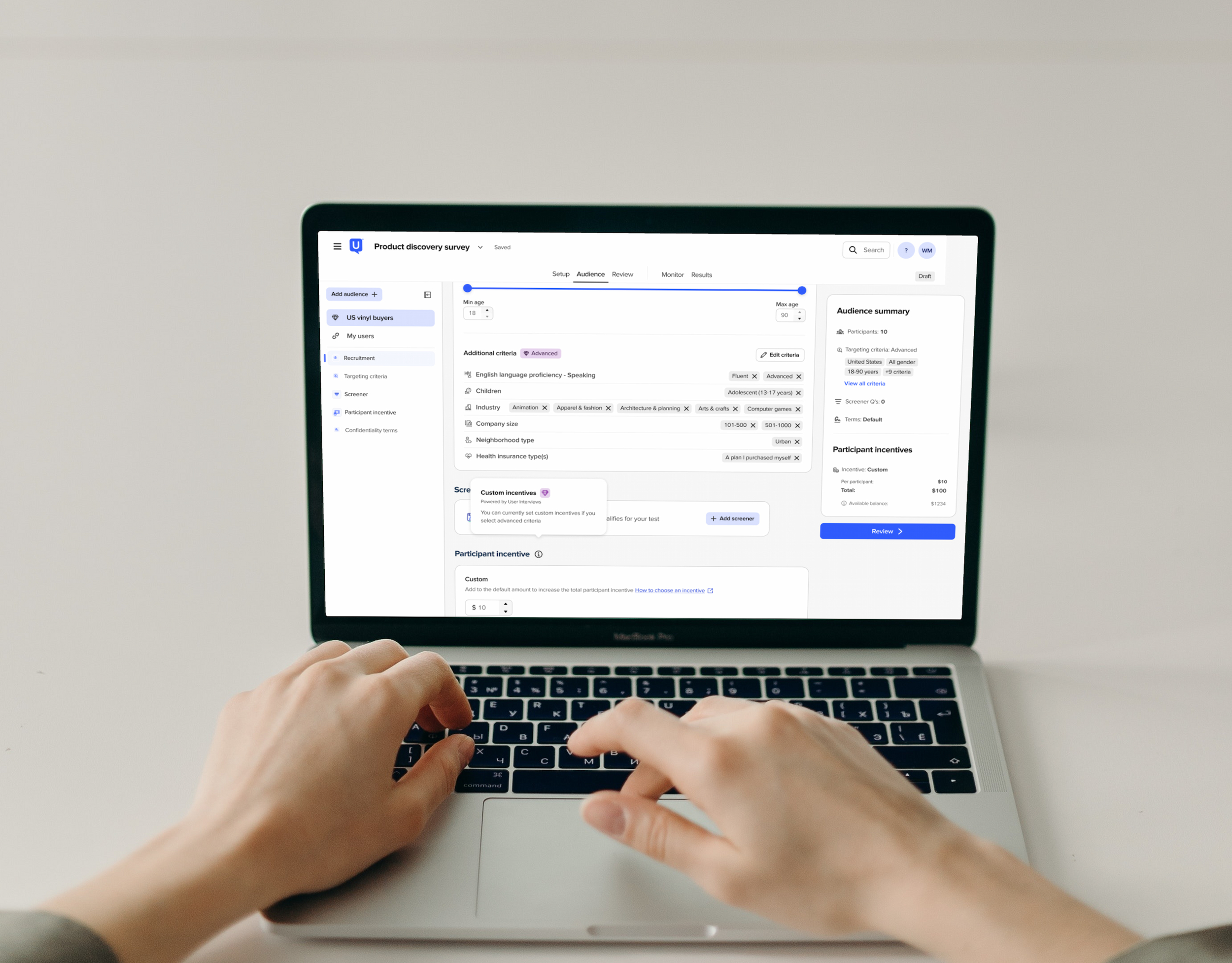
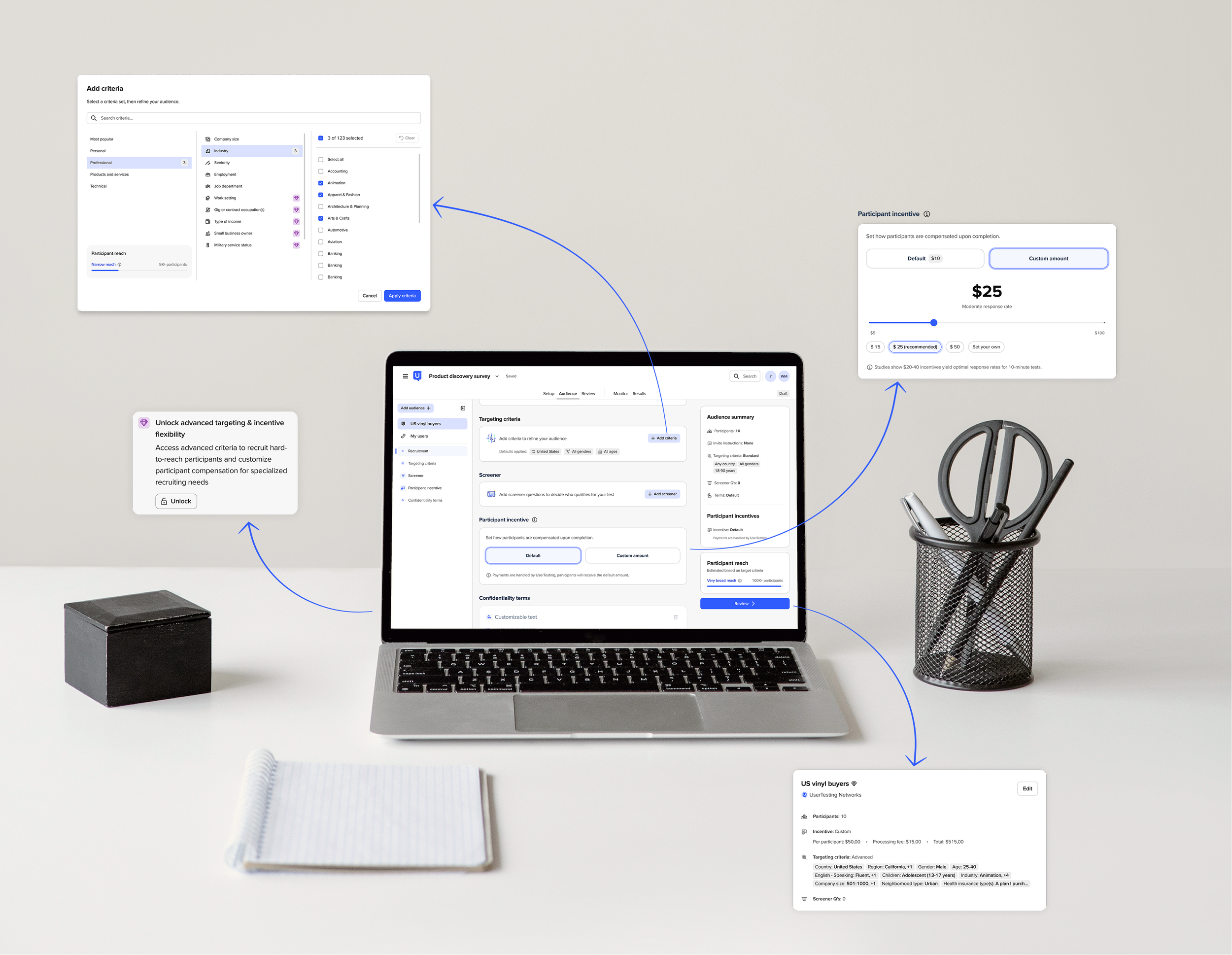
Advanced targeting introduced a new criteria architecture: three core targeting attributes surfaced upfront in the Audience Builder, with additional, more granular criteria available in a dedicated modal. This let customers start simple and go deeper only when they needed to, without adding options most studies don't require to the default flow.
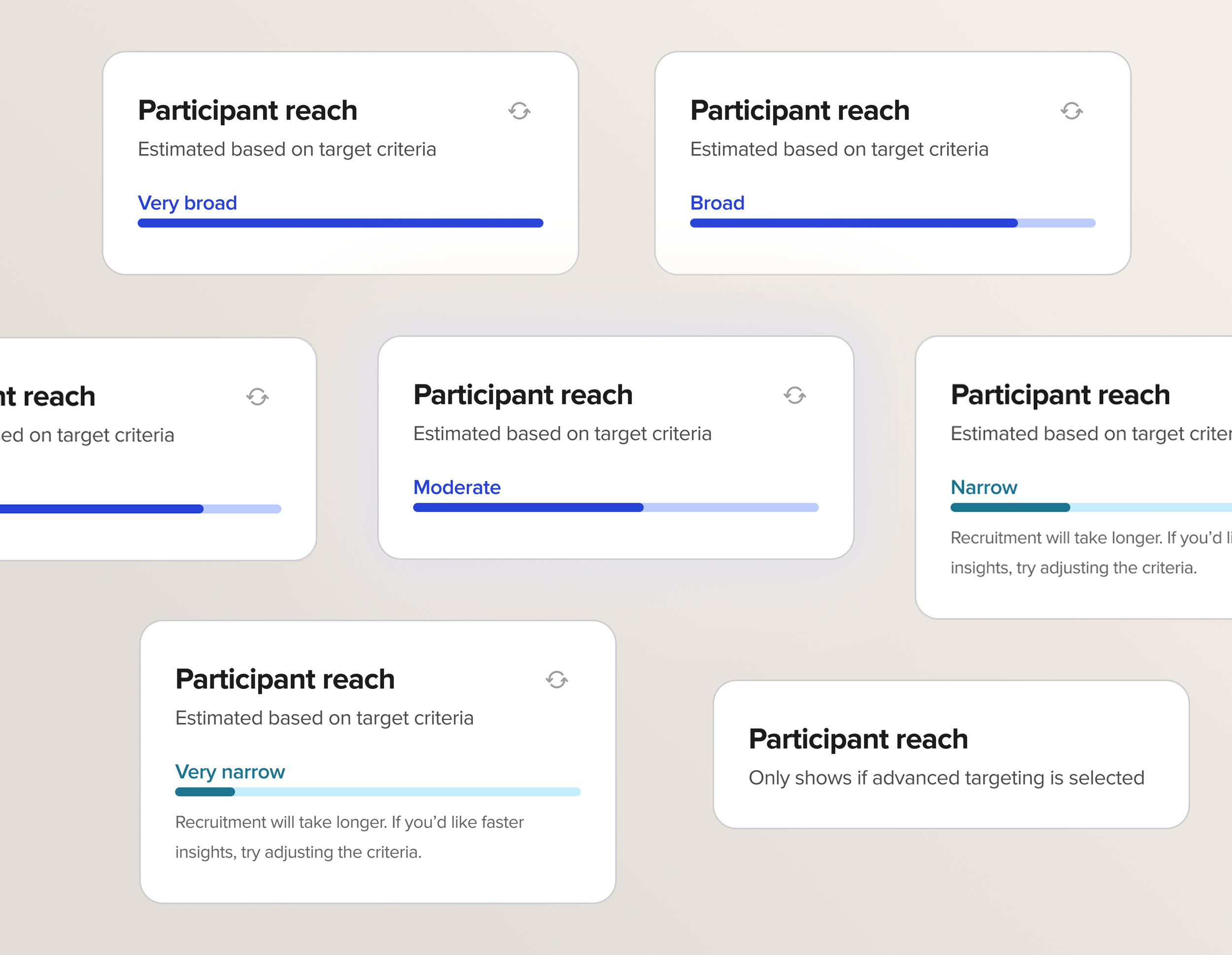
audience feasibility
Customers had little visibility into whether their targeting criteria would result in enough participants before launching a study. Participant reach estimation was adapted and integrated directly into UserTesting's Audience Builder, giving researchers early feedback on audience availability and letting them refine their criteria before launch.
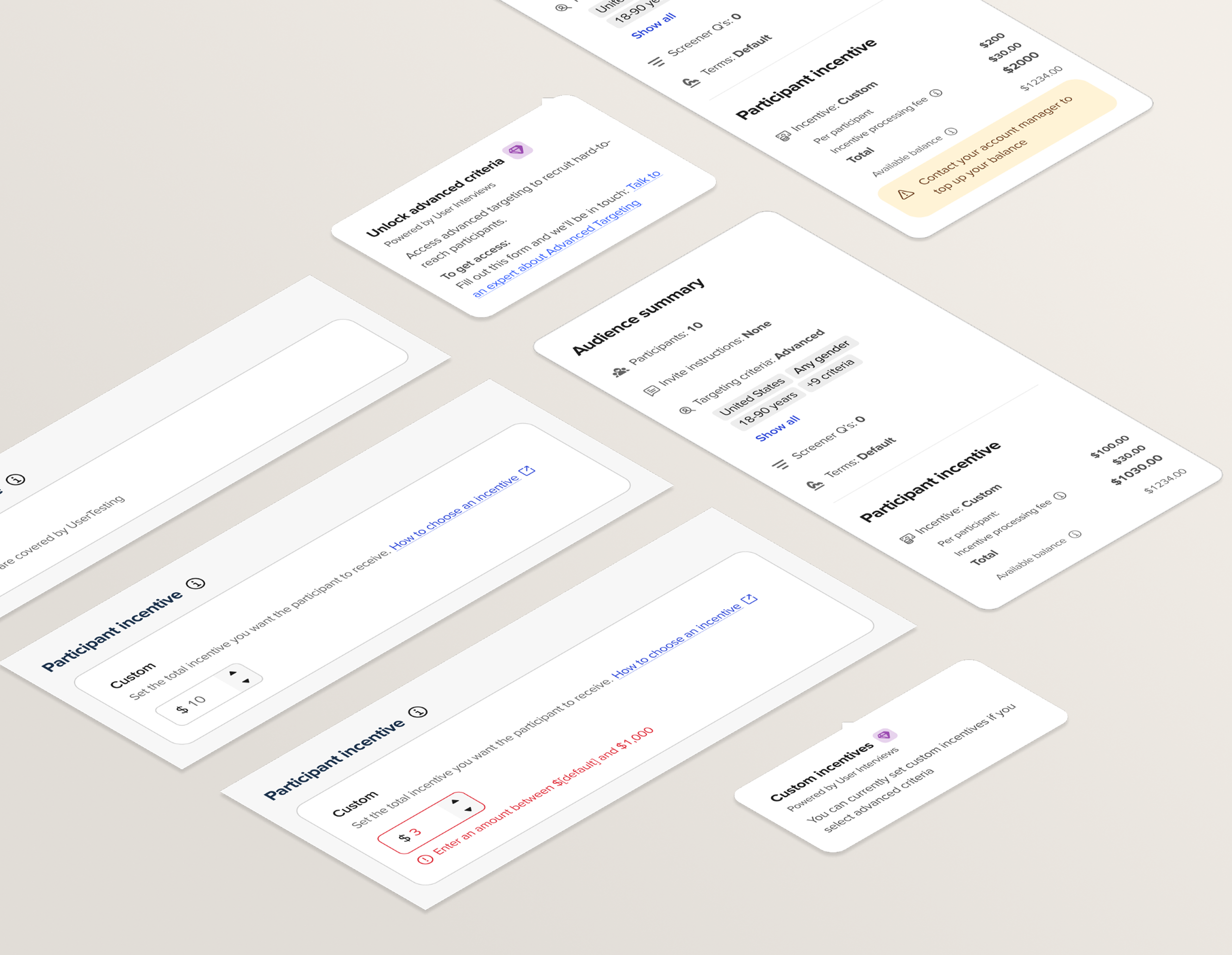
Custom incentives & transparent pricing
Advanced targeting introduced a new incentive model to UserTesting: researchers could offer custom incentives to reach niche participants, through their UserInterviews prepaid balance. For the first release, Advanced targeting and custom incentives were intentionally coupled, so the focus was on making the difference with UserTesting’s default incentives clear throughout the journey. The experience was designed with a more flexible future in mind, where targeting and incentive choices can evolve independently.
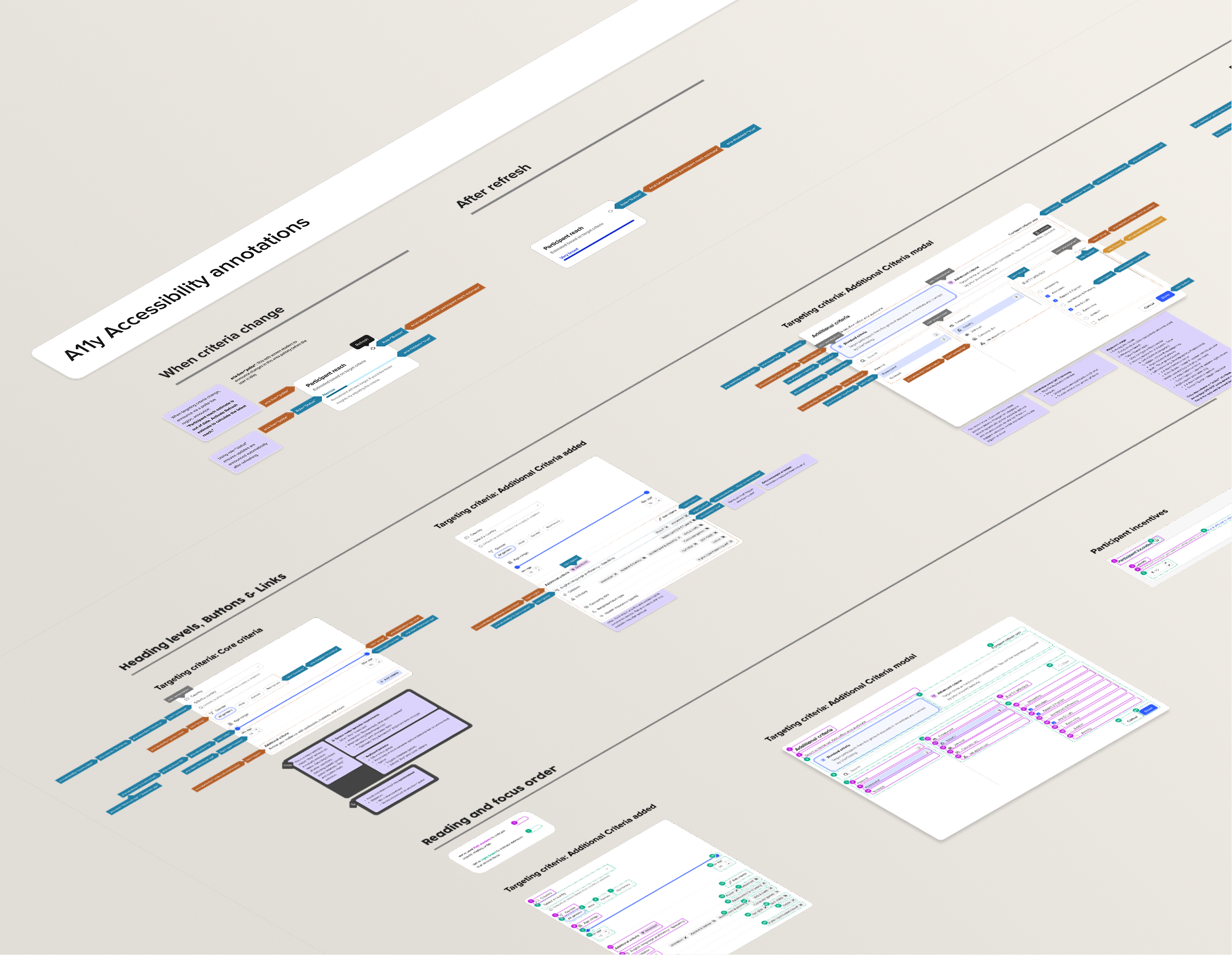
DESIGNING FOR EVERYONE
The Audience Builder introduced complex interactions, such as multi-column criteria selection, dynamic reach estimates, changing selections, and modal workflows.
Accessibility was designed into these interactions from the start, defining keyboard navigation, focus behavior, screen-reader announcements, and dynamic states, then validating the experience with accessibility specialists and Engineering through implementation and QA.
validation with real customers
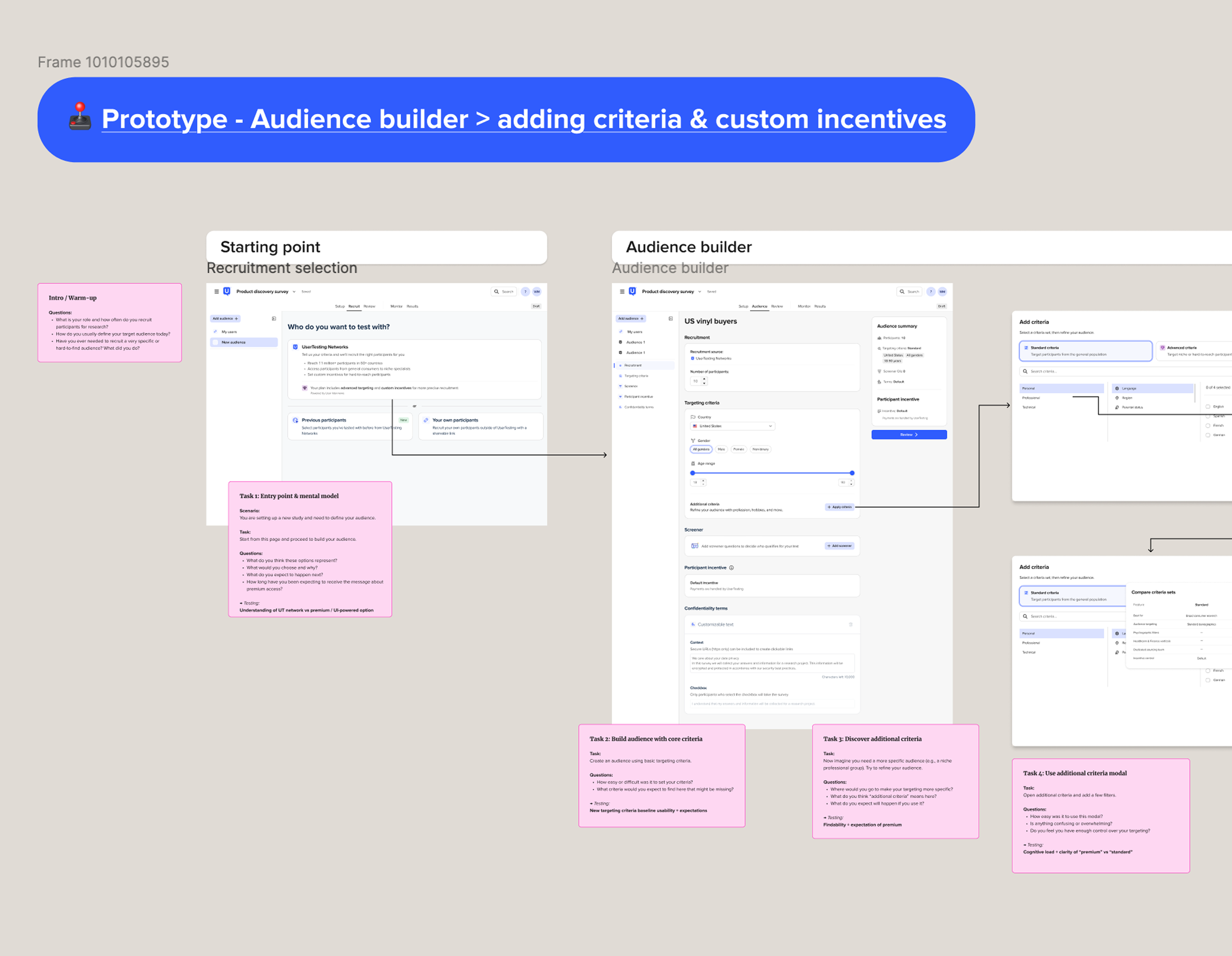
Before scaling beyond the MVP, we tested the new targeting experience with researchers actively recruiting niche audiences, validating that switching between modes, reading audience feasibility, and completing a full targeting flow felt intuitive without explanation.
"I switched between modes, saw how many people I'd actually reach, and adjusted before launching. That alone saved me a follow-up call I'd normally have to make."
Participant 4 - Researcher @Adobe
These sessions confirmed the core interaction model and directly shaped the vision of the integration below.
designed with the end state in mind
Rather than designing only for what was technically possible today, we defined the ideal end-state experience early — one unified targeting flow with no switching between Standard and Advanced, flexible incentives, and real-time audience feasibility — and used it as the reference point for every trade-off along the way. Shaped by research and validated learnings from the first release, this isn't a separate "nice to have": it's what current roadmap decisions are already being measured against.
impact
DELIVERY
4 —> 6
MONTHS
Planned timeline reduced by 2 months with an AI-augmented workflow
RECRUITMENT
NICHE
AUDIENCES
Advanced targeting + custom incentives brought specialized recruitment into UserTesting
WORKFLOW
1
EXPERIENCE
Target, screen, incentivize, launch and analyze without switching platforms
CUSTOMER FEEDBACK
“The experience felt familiar enough to use immediately, while unlocking a much more precise way to recruit.”
Participant 2 - Researcher @DocuSign